Dear Physics: We need to talk about Biology
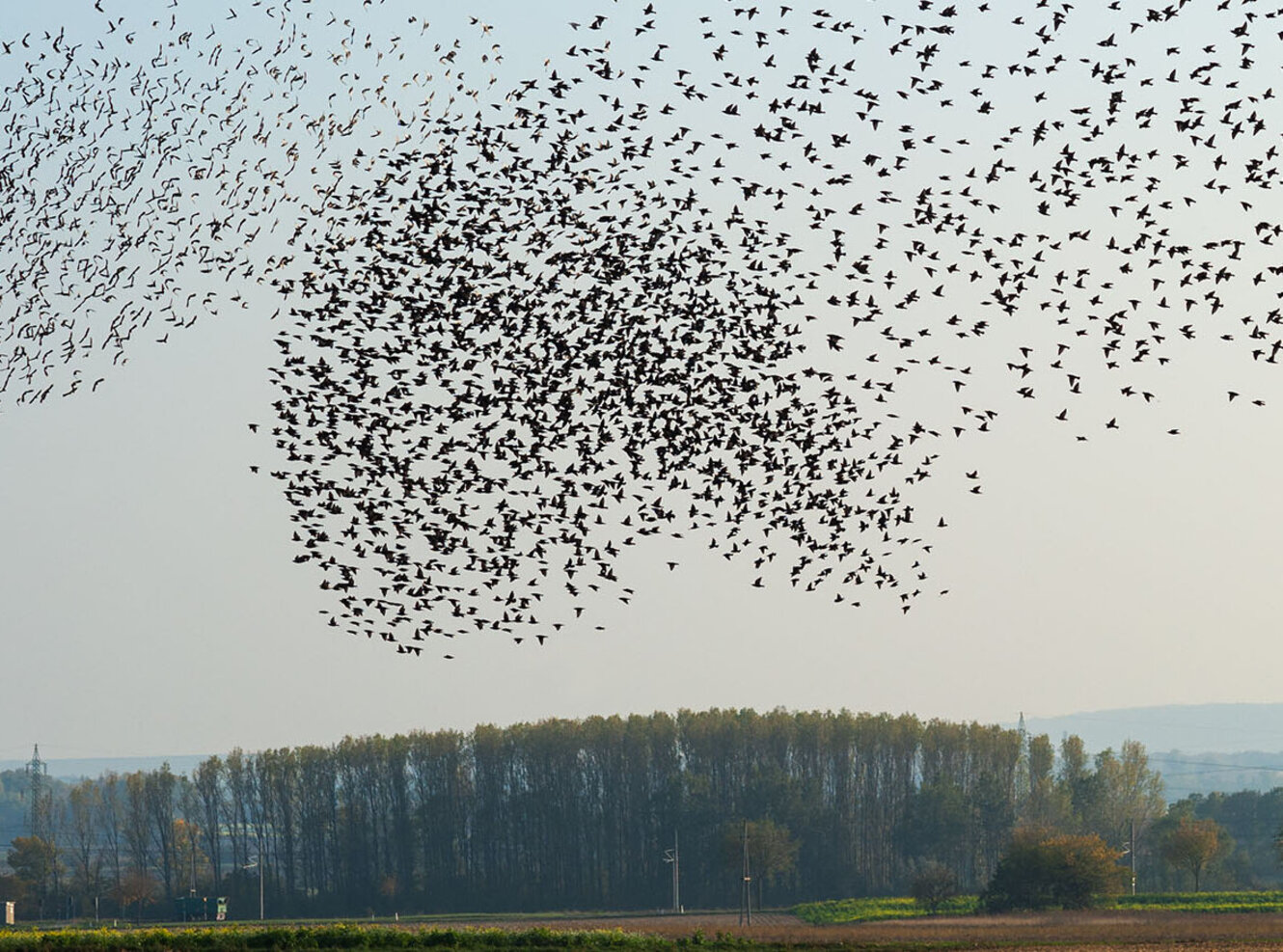
Unlocking the secrets of how thousands of starlings coordinate their movements or how social insects build complex nests requires more than just a pair of binoculars. It requires a blend of biology, physics, and mathematics. While the field of collective animal behaviour has successfully combined laboratory experiments with theoretical models, new technological leaps are pushing researchers to look deeper. In their perspective paper, Pawel Romanczuk and Valentin Lecheval outline how the next generation of research will bridge the gaps between individual biology, evolutionary history, and high-tech artificial intelligence. The authors identify several critical frontiers, including the need to bridge "proximate" mechanistic explanations (how animals move) with "ultimate" evolutionary causes (why they move that way), and the challenge of moving beyond a few "model" species to a generalized understanding across the animal kingdom. Furthermore, they advocate for unified models that combine collective decision-making with spatial movement, and for "reclaiming" AI as a theoretical tool to test hypotheses about animal cognition. Read the full review in The Royal Society for more information.
Abstract
The field of collective animal behaviour has developed a rich interdisciplinary culture to uncover the behavioural mechanisms that underlie the collective patterns and dynamics of animal societies. Specifically, this field has been successful in combining empirical studies mainly performed in the laboratory with modelling approaches drawn from mathematics and physics. Ongoing technological advances such as virtual reality systems, drone recordings and automated tracking or artificial intelligence continue to reshape the methodological landscape demanding a further strengthening of interdisciplinary practices. Here, we describe several current research questions and approaches that we anticipate to be fundamental in the future. We investigate how these future research directions are poised to engage an expanding set of disciplines to further complement and extend current collaborations. We will also examine the challenges our field faces in encompassing a growing number of research practices, along with potential practical steps for addressing them. We discuss the importance of developing broader interdisciplinary practices and structures to advance our understanding of collective behaviour.