From scrap to snack
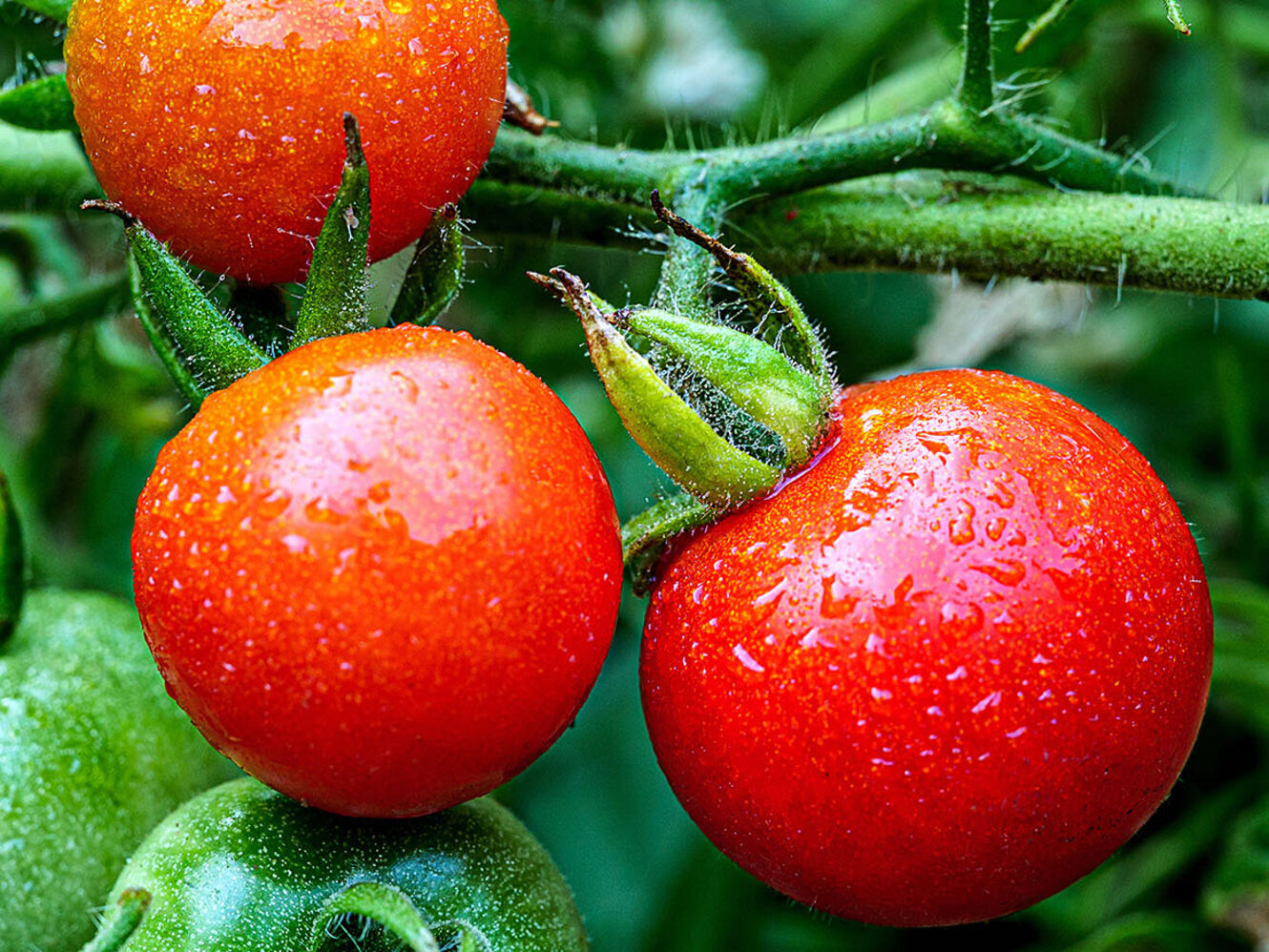
To manage the massive amount of agricultural waste generated by greenhouse cultivation, recent research focuses on the use of tomato leaves. Although tomato leaves are rich in proteins and beneficial lipids, their high fiber and toxic glycoalkaloid content limit their use as standard animal feed. The Urban Plant Ecophysiology Group (Christian Ulrichs) addressed these challenge by investigating its viability as a breeding substrate for rearing desert locusts (Schistocerca gregaria) as a sustainable insect protein source. They compared the effects of feeding locusts freshly harvested leaves against alternative post-harvest handling methods. The results demonstrated that storing or water-maintaining the leaves reduced the labor and frequency of daily harvesting operations without hindering the locusts' growth performance, dry weight or survival rates. Furthermore, while these alternative storage techniques altered the moisture and glycoalkaloid levels of the leaves, the reared locusts maintained a high crude protein content and a rich profile of beneficial alpha-linolenic fatty acid, while showcasing an enhanced accumulation of essential minerals like copper and zinc. If you want to learn more about the use of tomato leaves, have a look at the Scientific Reports Article.
Abstract
Tomato leaves are an abundant agricultural waste stream; however, their use as feed is limited due to their high fiber content and the presence of toxic glycoalkaloids. This study evaluated the feasibility of utilizing tomato leaves for rearing desert locusts as a source of insect protein. Locusts were fed freshly harvested leaves, leaves stored for different durations, and leaf cuttings maintained in water to preserve freshness. The results showed that storage and water-based maintenance reduced the need for daily harvesting without negatively affecting growth performance or survival, while significantly increasing the accumulation of Cu, Zn. Notably, although tomato leaves maintained in water contained high levels of α-tomatine and dehydrotomatine, their accumulation in the locusts was reduced. Crude protein content ranged from 59.37% to 60.51%, and α-linolenic acid (C18:3, n-3) was the predominant fatty acid, accounting for 40.63% to 43.12% across treatments. Overall, tomato leaves can be stored or appropriately handled as an alternative to freshly harvested leaves without compromising locust growth, while enhancing the accumulation of Cu and Zn and reducing the frequency of daily harvesting and feeding operations.