Keeping It Centromereal
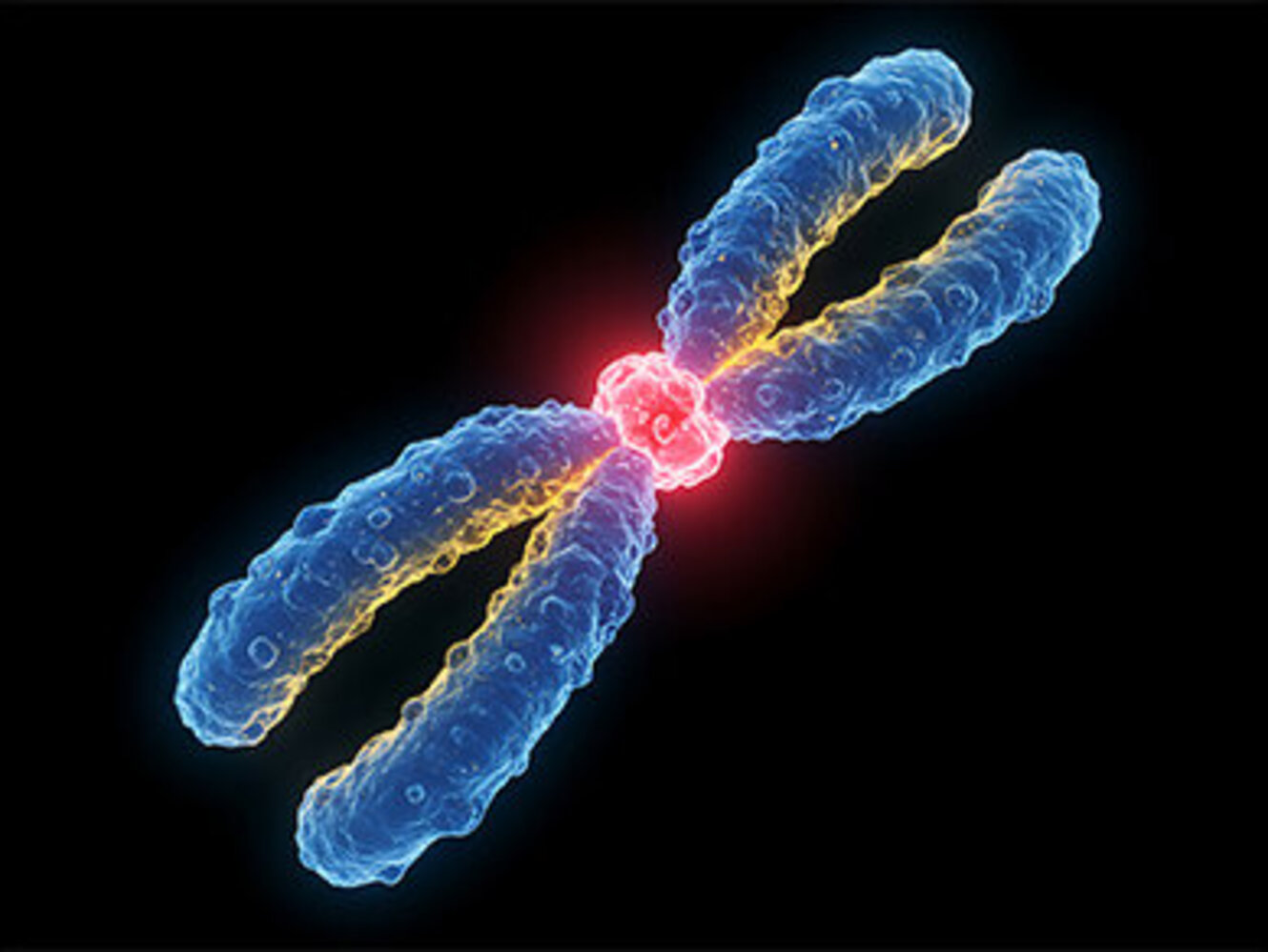
Every time a cell divides, it faces a remarkable challenge: ensuring that its genetic information is passed on accurately to the next generation. At the heart of this process lies the centromere, a specialized region of chromosomes that acts like a molecular anchor during cell division. But building and maintaining this essential structure requires a carefully coordinated team of proteins. The Molecular Cell Biology Group (Ann Ehrenhofer-Murray) investigated one of these proteins, Yta7, a chromatin remodeler that helps organize DNA and its associated proteins. By searching for genetic changes that compensate for defects in centromere function, they uncovered unusual Yta7 variants that alter the protein's activity and improve the incorporation of key centromeric components. Read their Genetics Article to explore the fascinating machinery that ensures every new cell gets the right genetic package.
Abstract
The chromatin remodeling factor and histone chaperone Yta7 is a member of the ATAD2 family of AAA+ ATPases from Saccharomyces cerevisiae that has in vivofunctions consistent with both nucleosome assembly and disassembly activity. At the centromere, Yta7 is required for proper deposition of the centromeric histone H3 variant CENP-ACse4. Here, we performed a genetic screen to identify suppressors of the defect of a mutation in CENP-ACse4 that impairs the interaction with the DNA of the centromeric nucleosome (cse4-S135A). This identified two suppressor alleles of YTA7, yta7-R483S and -D518E, which are in the AAA1 domain of Yta7. Interestingly, Yta7-R483S enhanced the deposition of CENP-ACse4 at the centromere and showed a ∼40% increased ATPase activity, suggesting that the hyperactivity of the motor domain is responsible for suppression of the cse4-S135A growth defect. In contrast, Yta7-D518E showed reduced ATPase activity, but both Yta7-R483S and -D518E retained the interaction with CENP-ACse4 and centromeric sequences as well as hexamer formation in vitro. Our analysis of in vivo interactions between Yta7 and CENP-ACse4 further showed that the two AAA+ domains and the non-canonical bromodomain of Yta7 are necessary and sufficient for interaction with CENP-ACse4. The genetic screen furthermore revealed a mutation in the chromatin remodeler Fun30 as a suppressor of the centromeric defect of cse4-S135A. Altogether, this work reveals unusual, hypermorphic properties of Yta7 variants and highlights the importance of nucleosome remodelers in establishing centromeric chromatin.