No words needed
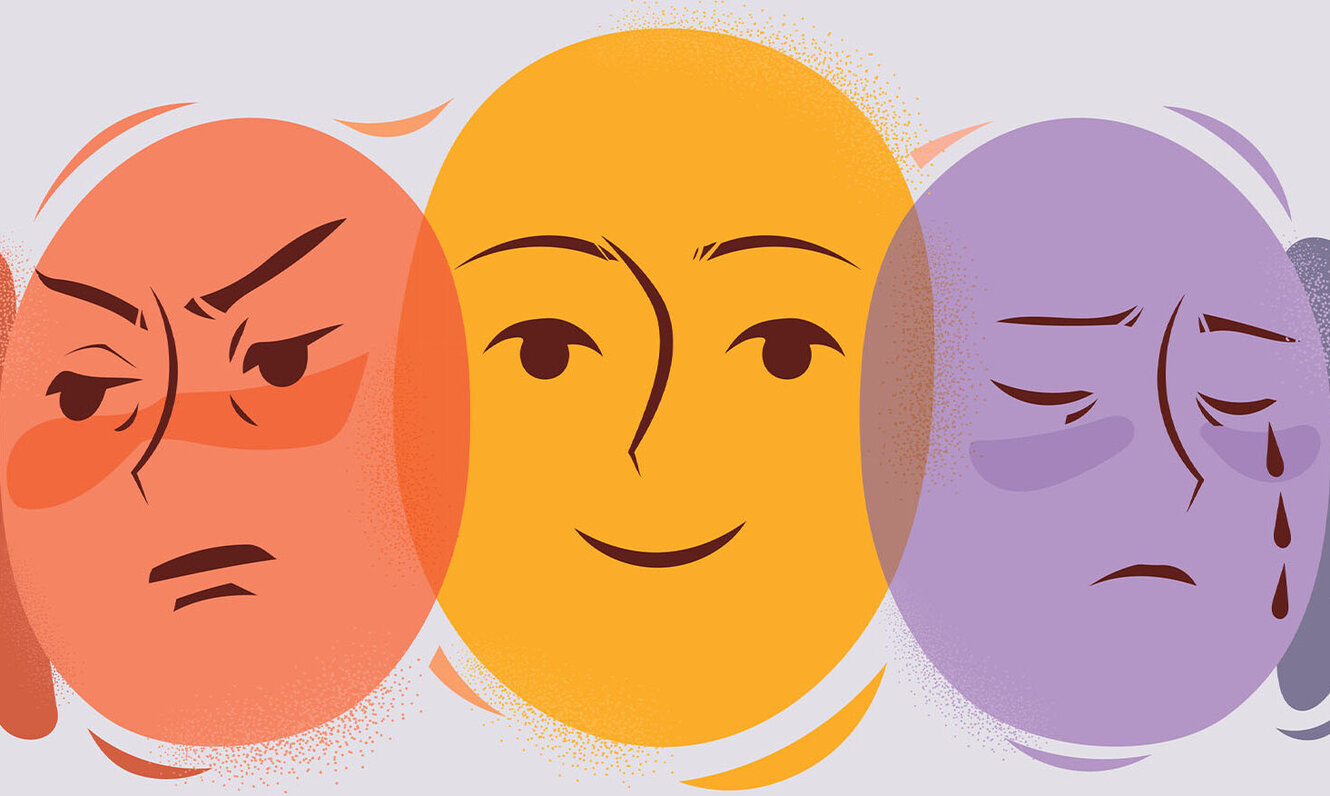
When researching emotions, language can often be a barrier. Words like Schadenfreude don’t always have a direct equivalent in other languages, and young children may not yet have the vocabulary to describe complex feelings. To solve this, a team of researchers developed the Nonverbal Emotion Assessment Tool (NEAT), a language-free instrument that uses schematic facial drawings to measure both the type and intensity of emotions. The Social and Organizational Psychology Group (Ursula Hess) now validated the tool across two distinct groups: German primary school children and adults from Germany, Bulgaria, and Malaysia. They found that the NEAT is highly effective at capturing “attributed emotions”, the feelings people recognize in others or themselves. While children as young as six were able to match the schematic faces to emotional scenarios with moderate accuracy, the adult study revealed that the tool maintains high "construct validity" even across vastly different cultures. Although some regional differences were noted, the NEAT proved to be a reliable way to bypass the "translation trap". By using simple, bias-free drawings instead of photographs or words, this tool provides a new global standard for understanding the human emotional experience from childhood through adulthood. If you are interested in NEAT, read the Emotion Article.
Abstract
This research aimed to validate a newly developed tool for the assessment of emotions. The “Non-verbal Emotion Assessment Tool” (NEAT) is based on schematic facial expressions of emotions and serves to capture both quantitative and qualitative dimensions of common emotions. Study 1 (N=126) was conducted with primary school children (6 to 11 years), who matched the emotions represented in vignettes to the emotional facial expressions of the NEAT. Although the children’s recognition rates varied across emotions, they were overall moderately accurate. Older children did not perform substantially better than younger children. Study 2 validated the NEAT scales with adult participants from Germany (N=102), Bulgaria (N=116), and Malaysia (N=132). Cross-country intraclass correlations revealed cultural differences in emotion perception, yet the construct validity was high. Comparisons of the two European samples with the Southeast Asian sample yielded a lower level of agreement across countries than the comparison of the two European samples, suggesting more similarities between the German and Bulgarian samples and stronger differences between the European and the Malaysian sample. Together, these findings provide evidence that the NEAT is a useful and valid tool for the assessment emotions in child and adult samples from different areas of the world.