Stick to it!
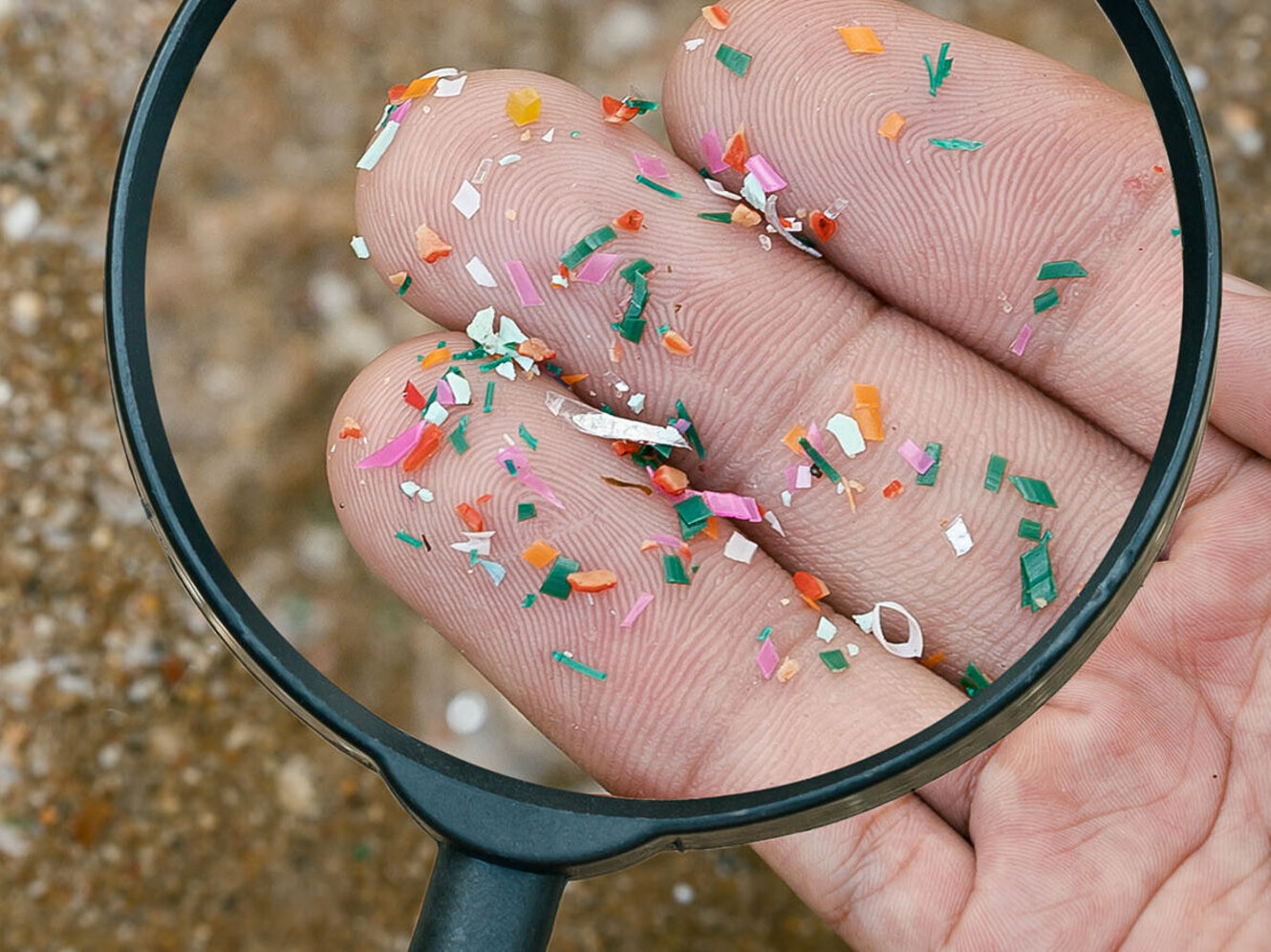
Nanoplastics are a growing environmental and health concern. Because of their microscopic size, they can cross cellular membranes and accumulate inside living tissues. Detecting and measuring these nanoparticles in water often involves complex laboratory processes, but optical methods like Surface-Enhanced Raman Scattering (SERS) spectroscopy offer a faster, non-destructive alternative. However, because plastic nanoparticles float in water and do not stick to the metal surfaces required for SERS to work, capturing them at low concentrations has been very difficult. In their newest article, the Optical Nanospectroscopy Group (Janina Kneipp) investigated the use of roughened gold electrodes and tested two methods to help draw plastic model particles closer to the metal surface: chemical coatings (self-assembled monolayers) and physical control using an applied electric field. They found that while chemical coatings help attract certain negatively charged molecules, applying a positive electrical voltage provides a much more flexible and precise way to pull the nanoparticles toward the electrode. By using this voltage-controlled approach, they detected polystyrene nanoparticles suspended in water down to concentrations as low as 5 mg/L, demonstrating a promising and efficient tool for monitoring nanoplastics without requiring complicated sample preparation.
Abstract
The manipulation of the surface properties of a plasmonic substrate is essential for achieving the proximity of an analyte to its surface as prerequisite for surface enhanced Raman scattering (SERS) spectroscopy. Here we studied the interaction of the five benzene derivatives 4-methylbenzene-1sulfonate, 4-vinylbenzenesulfonate, styrene (ethenylbenzene), polystyrene sulfonate (poly(4-vinylbenzenesulfonic acid)), and polystyrene (poly(1-phenylethylen)) for a plasmonic surface, with the intention to detect nanometer-sized polystyrene particles as nanoplastic model 2 analyte in suspension. Electrochemical roughening of screen-printed gold electrodes yielded cauliflower-like nanostructures that were (i) functionalized with self-assembled monolayers (SAMs) or (ii) polarized by applying static electric fields. We found that SAMs that lead to a positively charged electrode surface increased the signal intensities in SERS spectra of 4methylbenzene-1-sulfonate, 4-vinylbenzenesulfonate, polystyrene sulfonate and polystyrene nanoparticles. The detection of 4-methylbenzene-1-sulfonate and 4-vinylbenzenesulfonate was also enabled by application of a negative electrode potential. The strongest SERS signals of styrene were observed on a non-functionalized and neutrally polarized electrode surface, while the optimum spectral detection of the nanometer-sized polystyrene nanoparticles was attained with a positive potential. By electrokinetic manipulation, spectra of the nanospheres were obtained in suspension at a lowest concentration of 5 mg/L. Although the manipulation of both, the surface functionalization and the applied electric field improved the detection of the mono- and 1,4substituted benzene compounds, the electrosorption enables a more flexible and precise control over the adsorption/desorption process of the nanometer-sized polymer particles and is therefore a promising approach for the optical sensing of nanoplastics.