How to tan veggies right
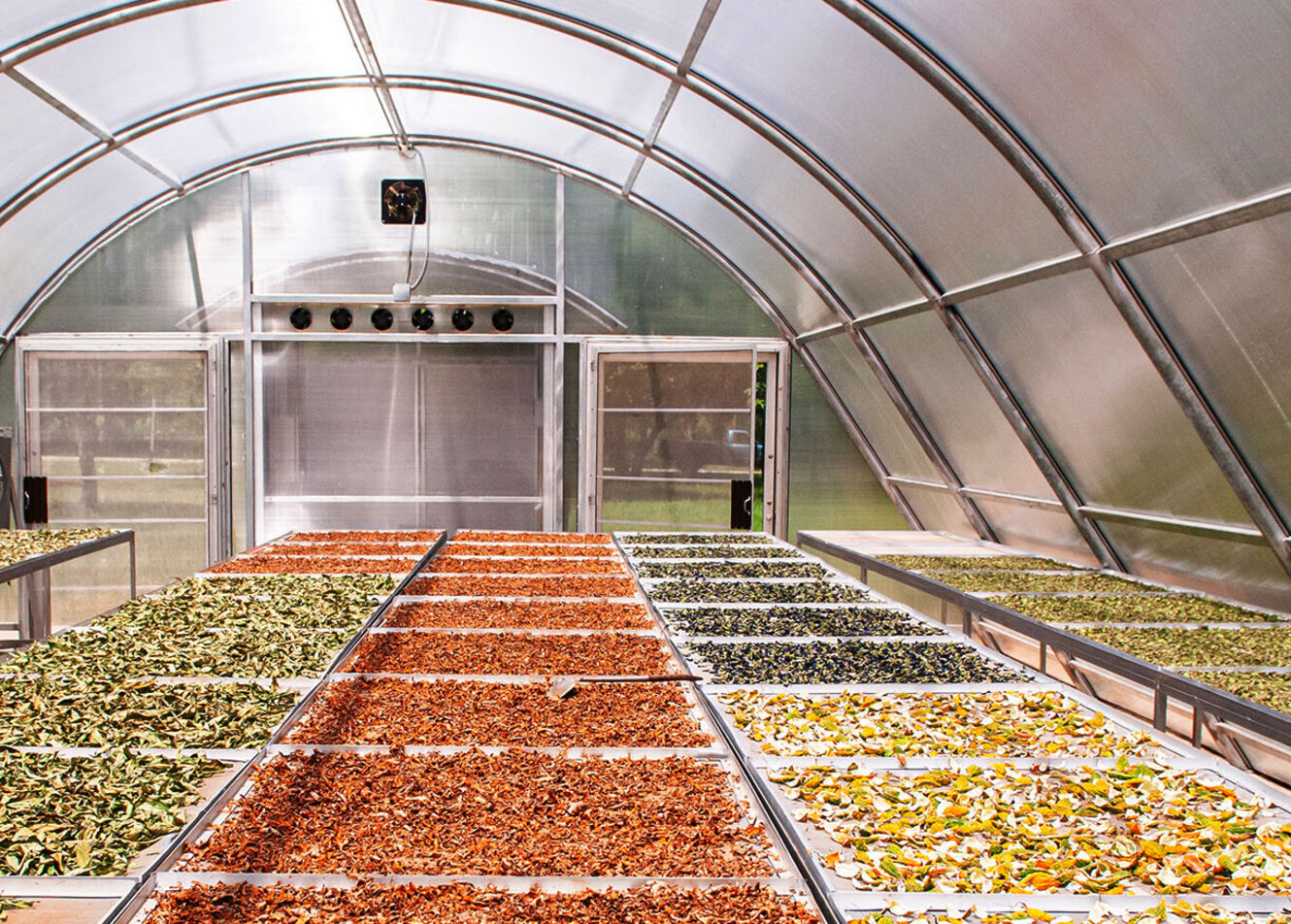
In a world where food security depends on preserving seasonal harvests, the sun is a powerful but tricky ally. While solar drying is an affordable way to keep vegetables from spoiling, the intense heat and light can be a double-edged sword for the vitamins and nutrients inside. The Urban Plant Ecophysiology Group (Christian Ulrichs) investigated how different solar drying methods affect the nutritional profile of African indigenous vegetables. Published in the Journal of Food Science, the research compares the effects of passive direct solar drying (PDSD) and passive indirect solar drying (PISD), followed by a 30-day storage period. The researchers found that while carotenoids were successfully retained in amaranth and pumpkin leaves, Abyssinian mustard was more sensitive, losing up to 45% of its carotenoids under direct sun. Interestingly, the study highlighted a significant "health win": both drying methods dramatically reduced nitrate levels, which are considered anti-nutrients in high amounts. By identifying how specific vegetables react to different drying "sun-baths," the study provides a roadmap for preserving the bioactive compounds that make these vegetables vital for human health.
Abstract
The present study compared the effect of passive direct solar dryer (PDSD) and passive indirect solar dryer (PISD), each followed by a 30 day storage period, on the secondary plant metabolite and nitrate contents of amaranth, Abyssinian mustard, and pumpkin leaves. Total carotenoid contents were retained in amaranth (0.70–0.85 mg g−1 dry weight [DW]) and pumpkin leaves (1.04– 1.16 mg g−1 DW) following PDSD and PISD. However, for Abyssinian mustard, a significant decrease of the total carotenoid contents (45% PDSD, 33% PISD) was observed compared to the control (oven-dried leaves) (0.98 mg g−1 DW). Total flavonoid contents were maintained across the vegetables (2.83–78.20 mg g−1 DW) irrespective of the drying treatment, except for amaranth leaves, where a significant decline (54% PISD) was observed compared to the control (5.83 mg g−1 DW). Although no significant difference was found in total phenolic acid contents between the control and the variants in amaranth, a significantly higher content was observed in pumpkin leaves (25.12 mg g−1 DW, PDSD) compared to the control (17.38 mg g−1 DW). Exceptionally for pumpkin leaves, a significant decline of the total chlorophyll contents (18%, PDSD; 16%, PISD) was observed after a 30-day storage compared to the initial contents (8.37 mg g−1 DW, PDSD; 6.49 mg g−1 DW, PISD). The nitrate contents obtained in this study (80–460 mg kg−1 fresh weight [FW], PDSD; 364–915 mg kg−1 FW, PISD) were below the maximum allowable limits by the European Commission Regulation (2000–4500 mg kg−1 FW), implying the safety of the dried vegetables with respect to nitrate levels.