The secret life of shaft synases
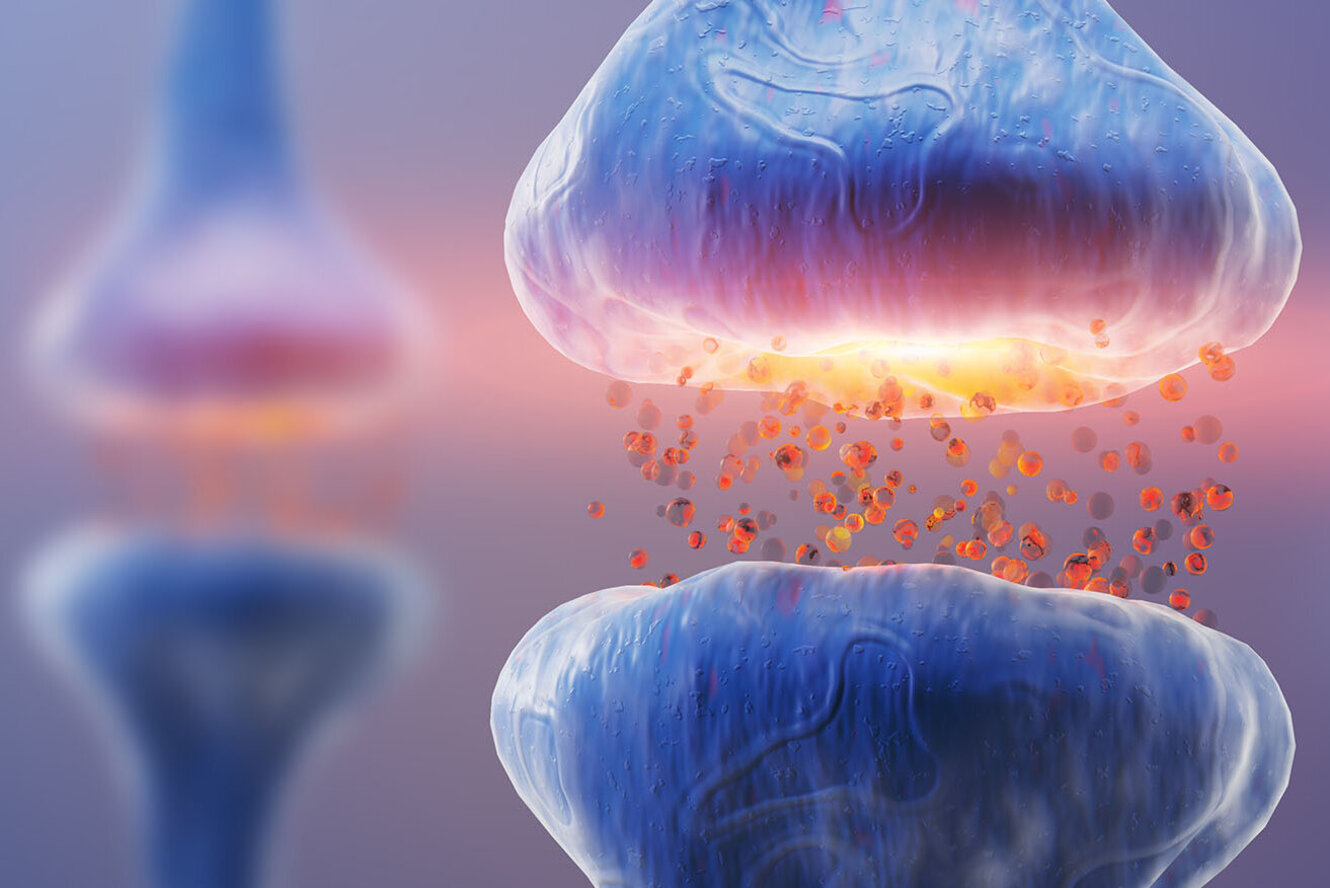
While the scientific community has long focused on dendritic spines as the primary hubs for excitatory communication in the brain, a significant portion of glutamatergic synapses (up to 30%) actually reside directly on the dendritic shaft. The Optobiology Group (Marina Mikhaylova) challenged this traditional "spine-centric" view of brain communication and revealed that these often-overlooked "shaft synapses" are far from being immature or passive structures. Instead, they are active, functional sites of neurotransmission with a molecular makeup that closely mirrors their more famous spine-bound counterparts. While these synapses possess a molecular toolkit similar to spines, they lack specific scaffolding proteins that govern their stability. This makes them highly dynamic: while they can grow during potentiation, they are significantly more vulnerable to being pruned away during long-term depression. By identifying shaft synapses as a distinct, high-turnover class of connections, their research provides a vital new perspective on how the brain fine-tunes its neural networks and regulates excitability in a transforming landscape. If you want to find out more about glutamateric synapses, read the full article.
Abstract
In the early stages of development, most excitatory synapses are formed directly on dendritic shafts. As neurons mature, these sites gradually shift from the shaft to dendritic spines. In fully developed excitatory neurons, the majority of glutamatergic postsynaptic sites containing the postsynaptic density (PSD) molecules reside on dendritic spines. However, some glutamatergic synapses remain as shaft synapses, yet their characteristics have remained unexplored. Here, we show that the molecular composition of the shaft PSDs closely resembles that of spine PSDs. Key components such as AMPARs, NMDARs, CaV1.2 channels, and F-actin interacting proteins, SynGAP, as well as cortactin, are present in comparable amounts in both synapse types. The major distinction between shaft and spine PSDs lies in the lower abundance of the scaffold proteins Shanks and Homer in shaft PSDs. Shaft synapses are not merely passive structures but actively participate in synaptic transmission. Their structure and function are modulated by changes in neuronal activity. Long-term live imaging combined with a cLTP protocol revealed that shaft PSDs were potentiated but rarely underwent a transition to spine synapses. In contrast, during LTD, shaft PSDs were eliminated more frequently than their spine counterparts. Together, these findings highlight excitatory shaft synapses as a distinct, and notably less stable, synapse type.