Prof. Dr. Tsu-Wei Chen
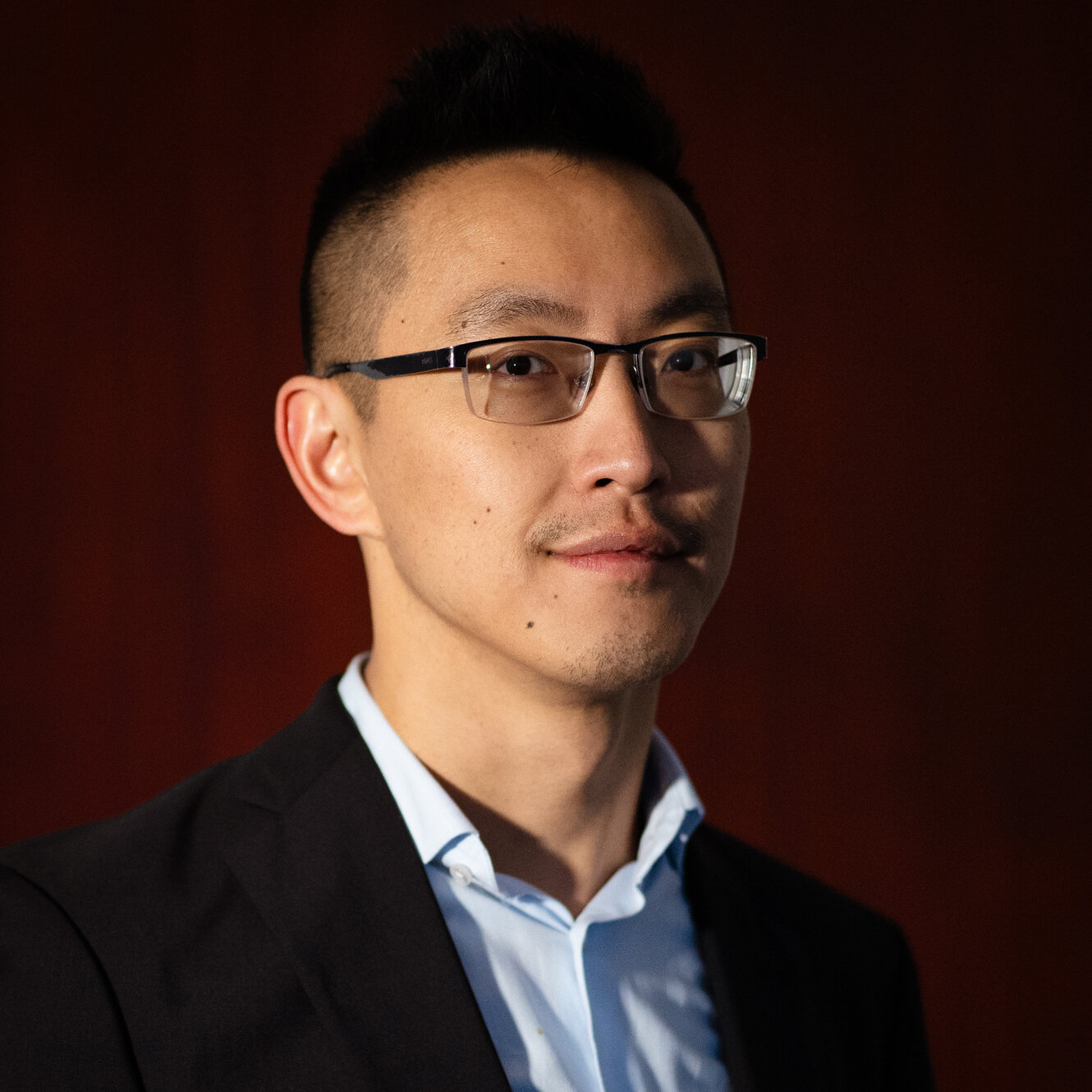
The Intensive Food Plant Systems Group works on understanding physiological functions of horticultural and agricultural crops (winter wheat, vegetable and fruit trees) and how these functions can be improved by plant breeding. They focus on:
- light-induced physiological responses, including photosynthesis, stomatal regulation, photo-acclimation and morphogenesis;
- interactions between light and other abiotic factors and deciphering these interactions using mechanistic models;
- up-scaling the environmental effects on leaf level to canopy level;
- breeding history of Germany's winter wheat; and
- nitrogen uptake and partitions in vegetable crops
The Chen Group uses modelling approaches and systems analyses as powerful tools in modern plant science to obtain a systems-understanding of the plant functions, to explain and to predict the physiological phenomena which are not straightforward for experimental biologists. They have interdisciplinary collaboration partners including computer scientists, mathematicians and crop geneticists.
Besides classical modelling approaches, they are specialized in functional-structural plant models, where the triple feedbacks between environmental triggers, dynamic canopy architectures and physiological functions can be analyzed. Further research focusses are model-assisted high-throughput phenotyping and physiological mechanisms optimizing canopy photosynthesis through acclimation strategies.





Modeling methods
- Functional-structural plant model
- Process-based plant model
- FvCB photosynthesis model
Data analysis
- Image analysis
- Quantitative limitation analyses
Experimental methods
- High-throughput phenotyping
- Model-assisted phenotyping
- Hyperspectral reflectance
- Gas-exchange measurements
- Agronomic measurements
Current position
| 2020 - present | Full Professor of Intensive Food Plant Systems at the Humboldt-Universität zu Berlin (DE) |
Positions held
| 2019 - 2020 | Junior Group Leader at the Leibniz Universität Hannover (DE) |
| 2011 - 2019 | Postdoctoral Researcher at the Leibniz Universität Hannover (DE) |
| 2015 - 2017 | Postdoctoral Researcher at the Institut national de la recherche agronomique, Paris (FR) |
Academic Education
| 2011 - 2015 | Doctoral Degree in horticulture science at the Leibniz Universität Hannover (DE) |
| 2009 - 2011 | Master’s Degree in horticulture science at the Leibniz Universität Hannover (DE) |
| 2002 - 2007 | Bachelor’s Degree in Biology at National Taiwan University (TW) |
Honors/Awards/Fellowships
| 2015 | Ernst-Klapp-Zukunftpreis: Young scientist award of German Society of Agronomy (DE) |
| 2013 | Grow Award: Young scientist award of TASPO foundation and German Society of Horticulture (DE) |
DFG-funded projects
| 2022 - present | Research Grant - 'Dynamic acclimation of source capacity in fluctuating light and temperature environments' |
| 2020 - present | Independent Junior Research Group - 'The functions of phenotypic plasticity in plant-plant interactions and canopy productivity' |
| 2019 - 2021 | Research Grant - 'Achieving yield stability by meta-mechanisms determining the stable canopy development in winter wheat' |
| 2018 - 2021 | Research Grant - 'Functional control of nitrogen distribution in heterogeneous plant canopies' |
Selected activities
| Grant reviewer | Research Council (ERC, EU) |
| German Research Foundation (DFG, DE) | |
| Alexander von Humboldt Foundation (DE) | |
| Biotechnology and Biological Sciences Research Council (BBSCRC, UK) | |
| Agence Nationale de la Recherche (ANR, FR) | |
| Flanders’ Foundation of Scientific Research (FWO, BE) | |
| Plant and Food Research Limited (NZ) | |
| Journal reviewer | Glocal Change Biology |
| New Phytologst | |
| Plant Physiology | |
| Journal of Experimental Botany | |
| Computers and Electronics in Agriculture | |
| Biosystems Engineering | |
| Remote Sensing | |
| Annals of Botany | |
| Theoretical and Applied Genetics | |
| etc. |