Mapping the Invisible
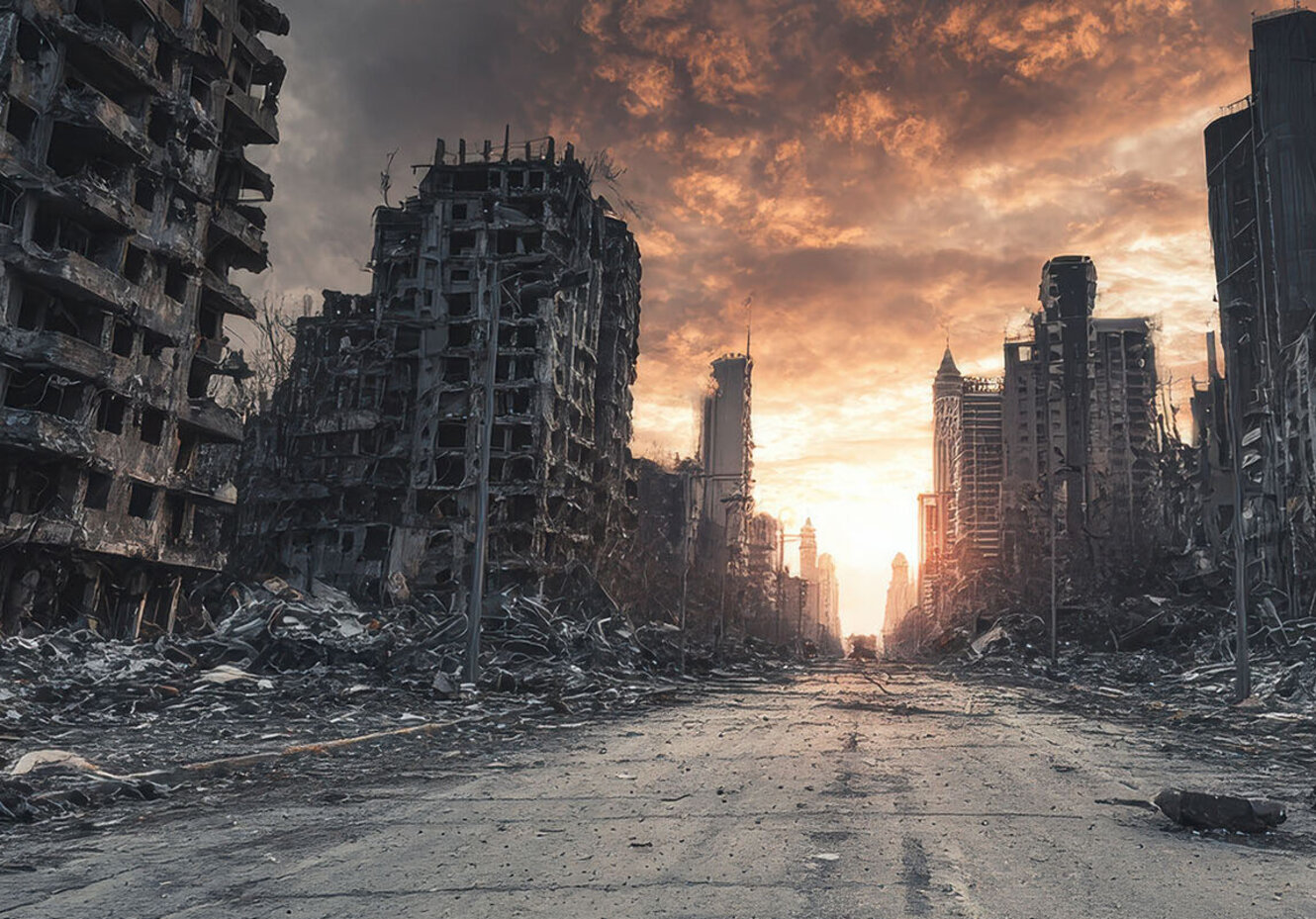
When crises like war, occupation, or infrastructural collapse strike a city, the resulting transformations are often too abrupt and uneven for traditional research systems to capture. The Landscape Ecology Group (Dagmar Haase) explored the profound challenges of studying these "empirically elusive" dynamics. By drawing on the experiences of war-affected Ukrainian cities, they argue that traditional research methods (designed for stable environments) fail to capture the transient and often invisible practices that sustain everyday life, which they define as Emergent Urban Resilience (EUR). To address this, the study proposes two frameworks: a structural model to map the intersections of urban infrastructure and social practices, and a dynamic model to track rapid temporal shifts during phases of profound opacity. Ultimately, the paper emphasizes that documenting these hidden dynamics is an ethical imperative that ensures the lived experiences of crisis-hit societies remain visible in global knowledge production, advocating for a shift toward more flexible and context-sensitive research methodologies. If you are interested in Emergent Urban Resilience, read the Ekonomichna ta Sotsialna Geografiy Article.
Abstract
Emergent urban resilience (EUR) develops within volatile and uneven crisis environments, where disrupted infrastructures, fragmented governance, unstable economies and shifting social practices interact in unpredictable ways. These dynamics make EUR analytically important yet empirically elusive. Evidence is often partial, rapidly outdated or entirely absent; many adaptive practices are short-lived and leave no stable trace. As a result, research tools designed for stable contexts struggle to capture how resilience takes shape during war and protracted disruption. This paper examines the conceptual, methodological and ethical challenges of studying EUR under such conditions. Drawing on a structural model of urban domains and a dynamic perspective on crisis temporalities, it shows why traditional assumptions about data, visibility and coherence do not hold. Rather than offering new methodological solutions, the paper outlines what researchers must consider when working with fragmented evidence and unstable field conditions, and highlights the interpretive and ethical responsibilities that accompany research in crisis-affected urban settings.